Daily Weird News Report
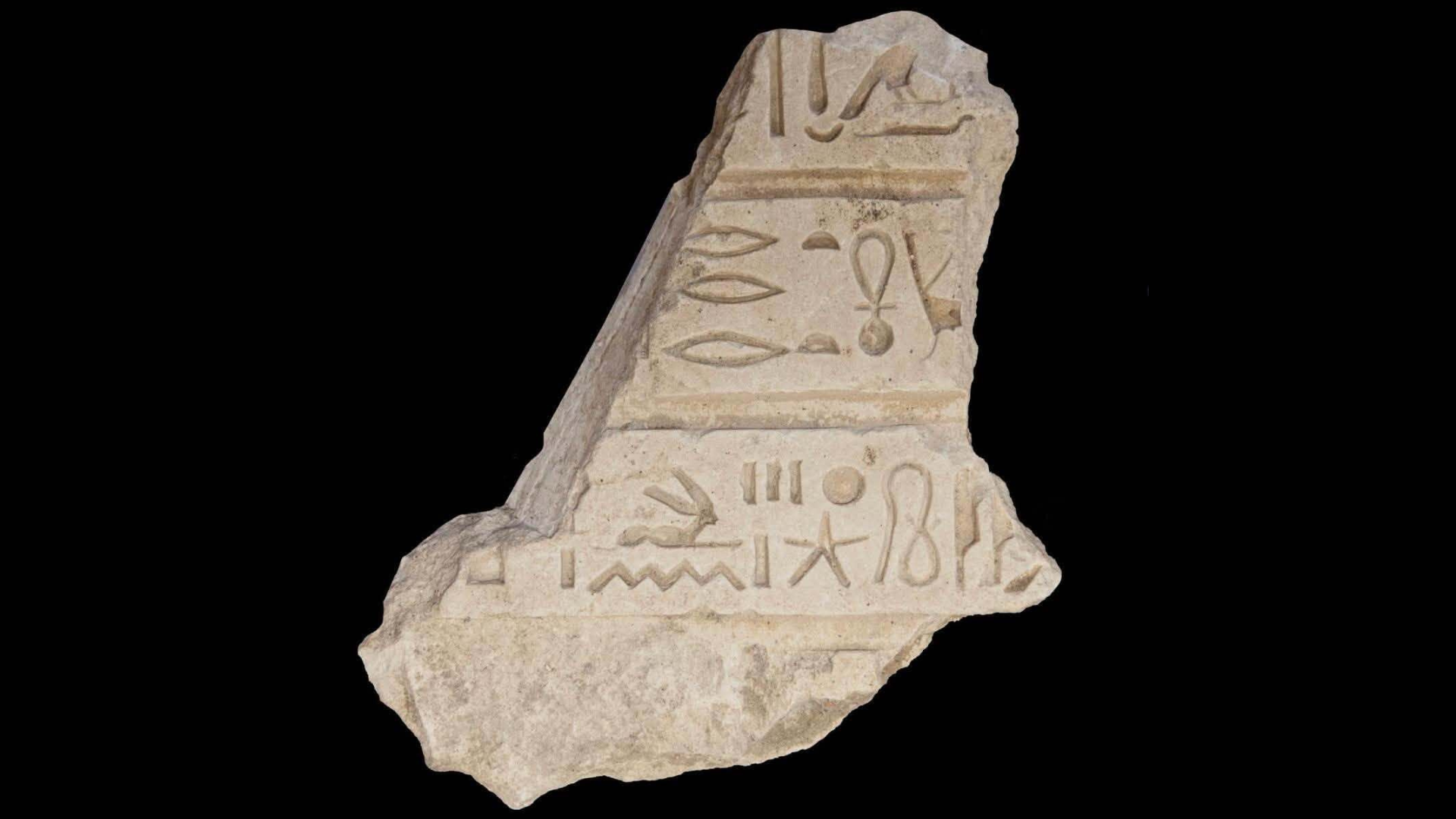
A 3,200-year-old hieroglyphic inscription discovered at Tell Abu Seifi, near Egypt’s modern Suez Canal, may help identify the location of the ancient city of Mesn, according to reporting by Live Science.
The inscription mentions Ramesses II, who ruled Egypt from about 1279 to 1213 B.C., and describes the falcon-headed god Horus as the “Lord of the City of Mesn.” Archaeologists also found the remains of a temple dedicated to Horus at the site, which lies near the northern Sinai Desert, the eastern Nile Delta and the ancient military route known as the Way of Horus.
Egypt’s Ministry of Tourism and Antiquities said the combination of the inscription and the temple creates a strong possibility that Tell Abu Seifi was Mesn. Hesham Hussein, a senior Egyptian archaeology official and member of the research team, cautioned that additional investigation is needed before the identification can be confirmed. The temple was almost completely destroyed, limiting what researchers can learn from it.
Mesn’s size, population and exact founding date are also unknown. If Tell Abu Seifi is the city, however, the settlement appears to have remained important for centuries. A bronze seal previously found there, dating to the Ptolemaic period between roughly 304 and 30 B.C., bears a similar reference to “Horus, Lord of Mesen.” Coffins from the same period discovered at the site also contain related inscriptions.
The location would have been strategically significant. The Way of Horus connected the eastern Nile Delta with the southern Levant and included a chain of fortresses. Peter Brand, a University of Memphis historian who was not involved in the excavation, told Live Science that Mesen near modern Qantara may have served as a departure point for Egyptian armies heading toward Canaan, Lebanon and Syria. The area was used during Egyptian military campaigns, including Ramesses II’s campaign that culminated in the Battle of Kadesh against the Hittite Empire.
Brand said the inscription’s reference to the restoration of a statue of Horus is notable because a matching statue pedestal had previously been found at the site. Other scholars, however, urged caution. James Hoffmeier said more evidence, including ceramics, would be useful, while Gregory Mumford noted that similar references to Mesn have been found at other regional sites. He suggested Mesn might have referred to a broader area rather than a single settlement.
Research at Tell Abu Seifi is continuing, and the site’s identification remains unresolved. Historical records also mention another settlement called Mesn in southern Egypt, adding to the uncertainty.