
Daily Weird News Report
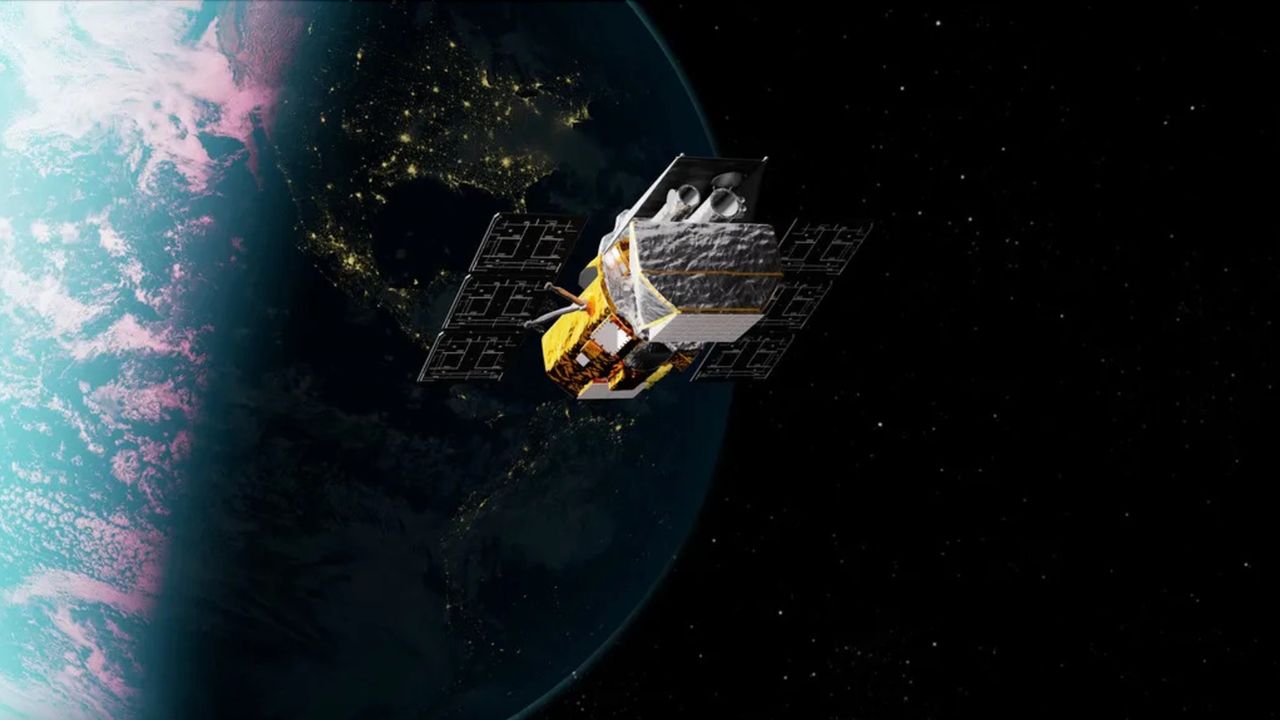
NASA’s Neil Gehrels Swift Observatory is headed back to Earth after a planned private-spacecraft rescue failed to reach the telescope in orbit.
Swift launched in November 2004 and spent more than two decades observing gamma-ray bursts and other cosmic phenomena with its Burst Alert, Ultraviolet/Optical and X-Ray telescopes. Its scientific mission has now ended, while high solar activity has accelerated the decay of its orbit.
NASA sought a solution in September 2025, offering a contract to Arizona-based Katalyst Space Technologies to boost the observatory into a higher orbit. Katalyst received $30 million and developed LINK, a robotic spacecraft that launched on July 3 for the attempted rendezvous.
The rescue did not happen. According to reporting by Space.com, LINK experienced attitude-control problems after launch, leading NASA and Katalyst to abandon the attempt. Katalyst CEO Ghonhee Lee later said the team had designed, built and launched the spacecraft within nine months, and that an additional three months could have made a significant difference.
NASA public affairs specialist Alise Fisher told Space.com that Swift will undergo an uncontrolled reentry. NASA does not expect that to happen before October and plans to provide more information as the event approaches through established interagency notification procedures.
Most of the observatory’s 613-kilogram dry mass is expected to burn up or break apart in the atmosphere. However, NASA says some components could survive. Darren McKnight of LeoLabs said parts of the X-ray and optical telescopes, including lenses and titanium tanks, might reach the ground, although he said he had not seen a publicly available survivability analysis.
The eventual impact area cannot yet be identified. Ewan Wright of the University of British Columbia’s Outer Space Institute said Swift’s 21-degree orbital inclination means surviving material could come down anywhere between 21 degrees north and 21 degrees south latitude. He said debris is most likely to land in the sea, though an impact in a populated area is possible.
NASA assesses the risk of harm to people on Earth as unlikely.


