Daily Weird News Report
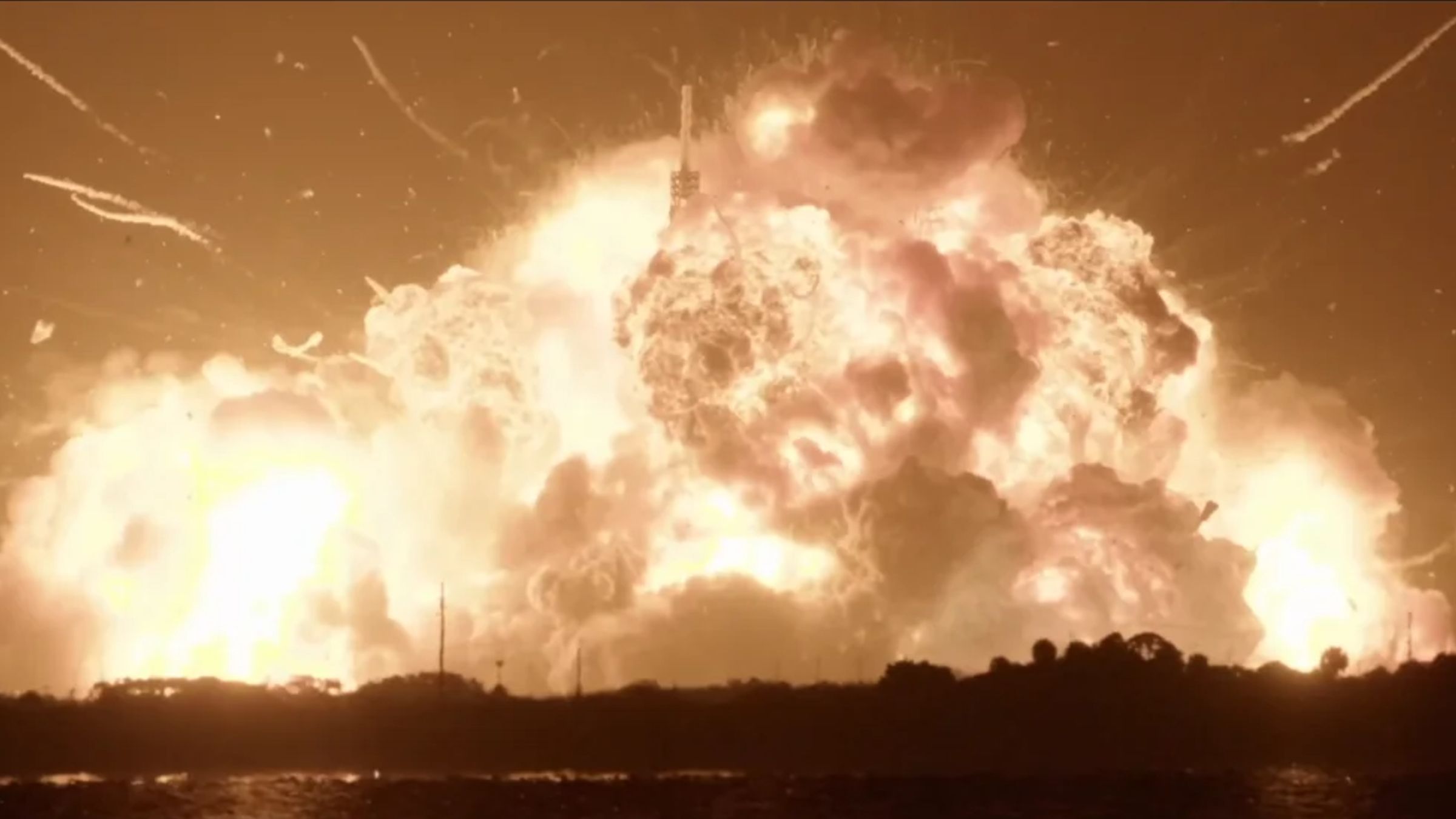
When Blue Origin’s New Glenn booster exploded during a prelaunch test in Florida on May 29, the blast was heard by local residents and also sent vibrations far beyond the launch site—though at frequencies too low for people to hear.
According to a study published Aug. 12 in The Seismic Record and reported by Live Science, at least 36 specialized listening stations across the United States detected infrasound associated with the explosion. The most distant station was in northeast Texas, approximately 1,046 miles (1,684 kilometers) from Cape Canaveral Space Force Station.
Infrasound consists of sound waves below the normal range of human hearing. Researchers analyzed the signals’ frequency and how far they traveled to estimate that the explosion had energy equivalent to 0.131 kilotons, or about 144 U.S. tons, of TNT.
The researchers also estimated that the initial blast consumed between 3% and 6% of the booster’s cryogenic propellant. The study’s first author, Elizabeth Silber, a physicist and planetary scientist at Sandia National Laboratories, explained that fuel and oxidizer in a large propellant accident may not mix and react simultaneously. Some material can contribute to the initial explosion while the rest burns later in the fireball and plume.
The New Glenn booster exploded without warning during a static “hotfire test,” before the rocket’s planned fourth launch. The blast sent flaming debris into the air and created a large cloud that briefly illuminated the night sky. Nobody was injured, although residents reported hearing a powerful boom, and the resulting shockwave reached as far as 135 miles (217 kilometers) from the launch site.
Live Science reported that Blue Origin later identified a faulty oxygen valve as the likely cause. The explosion damaged the launchpad, with repairs expected to take at least a year, according to Ars Technica. The company has not attempted another New Glenn launch since the incident.
The researchers said the event demonstrates how infrasound can be used to study rocket accidents and other large explosions over long distances. The same team has previously used low-frequency sound data to track meteors and spacecraft entering Earth’s atmosphere.