
Daily Weird News Report
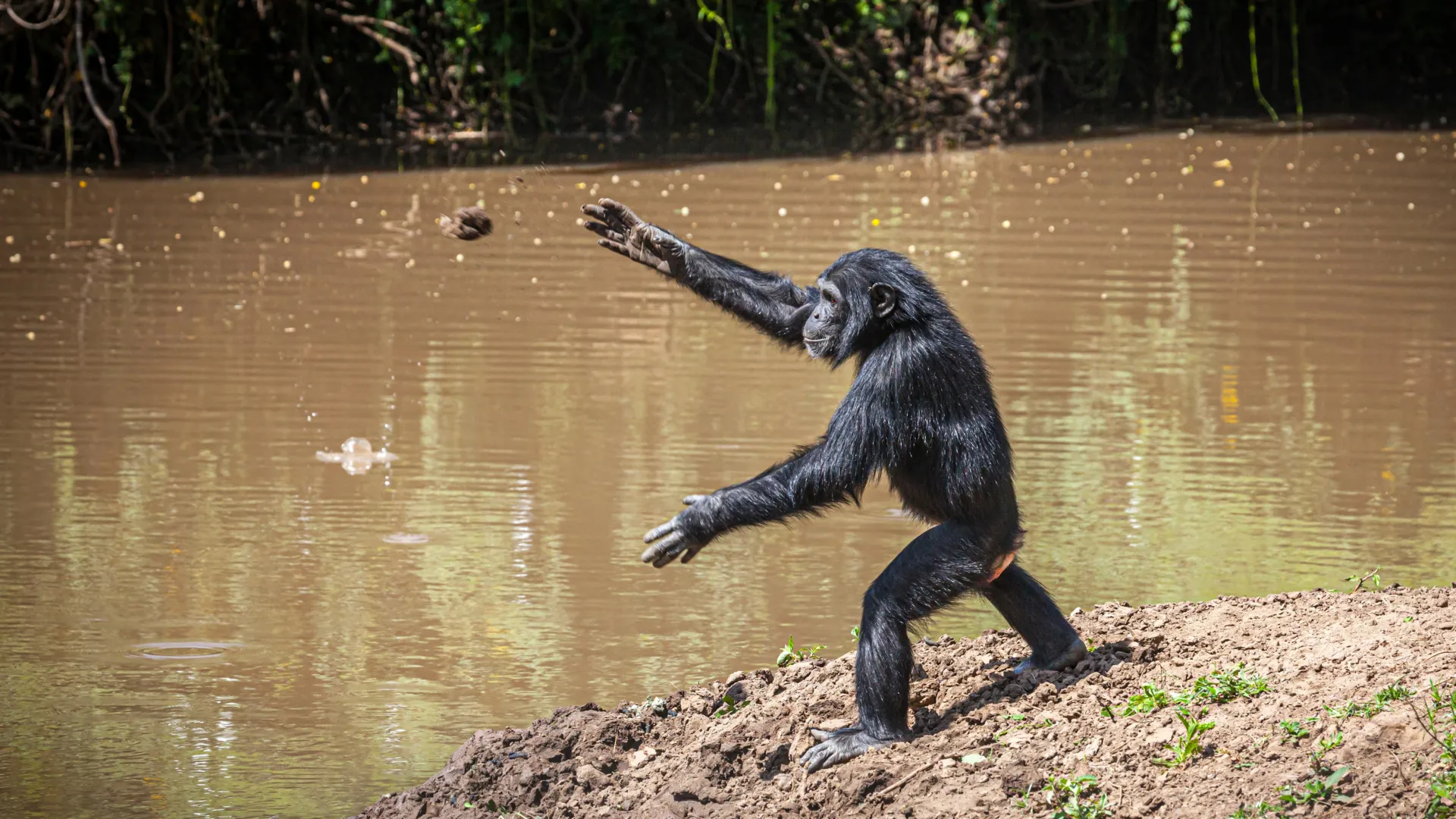
In Guinea-Bissau’s Boé National Park, some trees bear scars and sit above piles of stones that chimpanzees have apparently accumulated over years of repeated visits. Researchers studying the behavior say many of the sites were still active more than a decade after they were first identified.
The behavior, known as accumulative stone throwing, has been recorded among wild western chimpanzees in West Africa. Video observations show that the animals—usually adult males—throw rocks at specific trees and return to those locations. During the displays, they may also produce pant hoots, loud calls used for long-distance communication, and strike the trees with their hands and feet, a behavior called buttress drumming.
Researchers believe the activity may be cultural because it has been observed in only four chimpanzee groups and does not occur simply wherever suitable rocks and trees are available. Earlier work has suggested that the sites could have a communicative or symbolic role, perhaps identifying significant places within a chimpanzee territory. However, scientists do not yet know what the sites mean to the animals or why particular trees are selected.
The behavior is also unusual because it involves stones in a social setting rather than the more familiar use of stone tools to obtain food, such as cracking nuts. Researchers say studying it could provide clues about the development of complex communication and social tool use in chimpanzees and human evolution.
Because the Boé chimpanzees are not accustomed to people and flee from observers, researchers collected evidence remotely. They placed two video cameras at each site, along with audio-recording equipment, and gathered measurements of the trees and thrown rocks. The recordings are intended to show the age and sex of the chimpanzees involved and whether other animals nearby respond to the displays.
The researchers also report a conservation concern. Chimpanzee habitat in Guinea-Bissau faces pressure from extractive industries, including bauxite mining exploration. They encountered bore holes during fieldwork and warned that mining could contribute to habitat destruction and pollution. They argue that documenting behaviors such as accumulative stone throwing may help preserve both chimpanzees and forms of primate cultural material that could disappear if the animals lose their habitat.


