
Daily Weird News Report
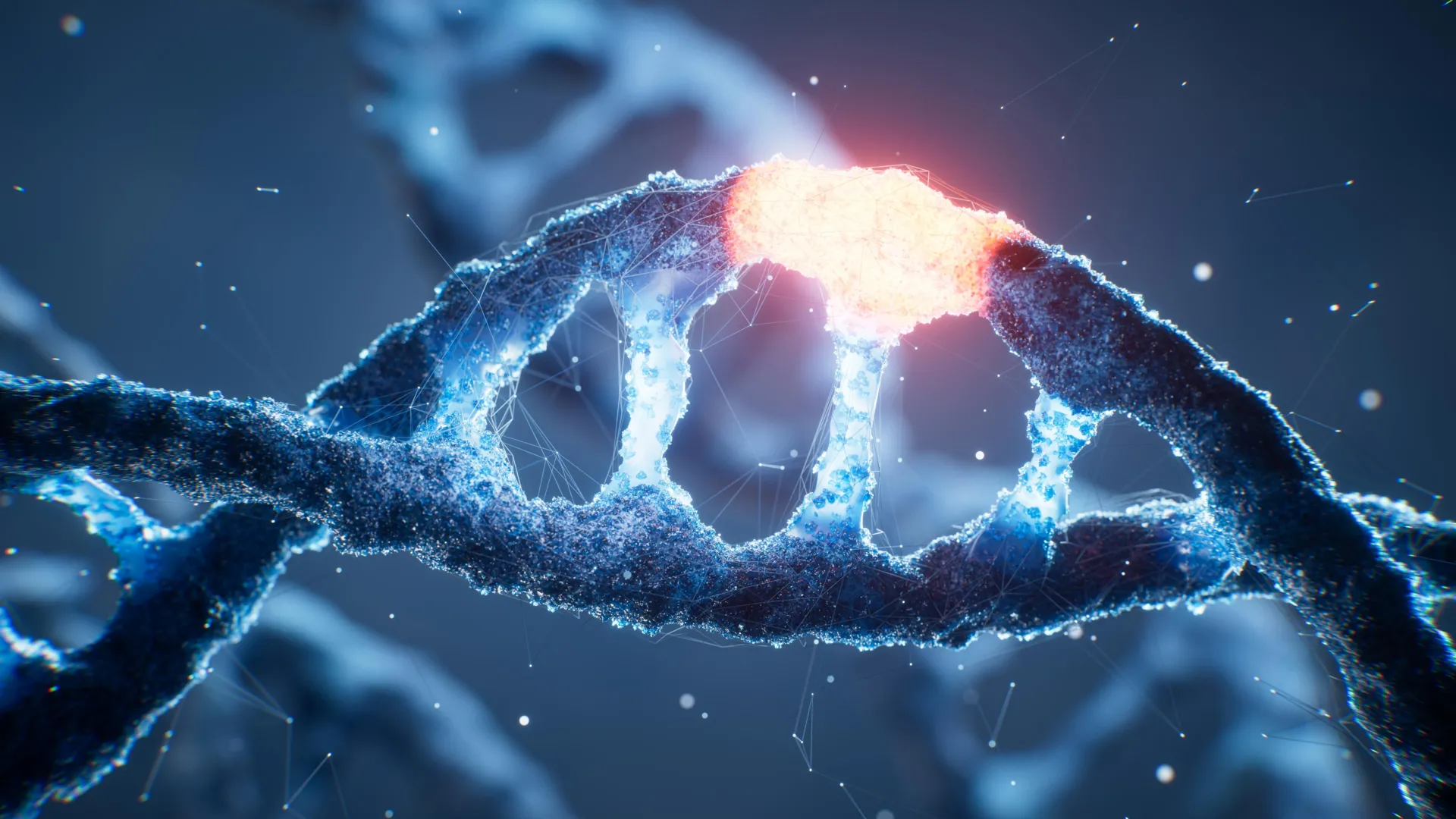
The genetic alphabet used by every known form of life has four letters. Researchers at the University of California San Diego have now demonstrated that a key cellular enzyme can work with an expanded version containing eight.
The enzyme, RNA polymerase, reads DNA and produces RNA, making it an essential part of gene expression. In experiments described by ScienceDaily from UC San Diego, the researchers tested whether RNA polymerase from Escherichia coli could process DNA containing two synthetic base pairs in addition to the natural ones.
The team combined biochemical experiments with high-resolution cryo-electron microscopy. The resulting structural images showed that the enzyme recognized the artificial letters through many of the same biochemical and structural signals it uses for natural DNA base pairs. RNA polymerase was able to incorporate information from the synthetic DNA into RNA.
That finding suggests existing cellular machinery may be capable of handling genetic information written in an expanded alphabet, rather than requiring an entirely new system. It also provides a closer look at how synthetic genetic material can interact with enzymes that evolved to work with natural DNA.
The research is part of a broader effort in synthetic biology to expand the genetic code. Earlier work has used enlarged genetic alphabets to create synthetic DNA molecules capable of recognizing liver cancer cells, according to the source. Future applications discussed in the report include diagnostic tools, therapeutics, and engineered biological systems that produce compounds or perform functions not found naturally.
A related study by the same research team, published in the Proceedings of the National Academy of Sciences, examined another synthetic base pair. Unlike ordinary DNA base pairs, these artificial letters do not rely on hydrogen bonds to hold the pair together, yet RNA polymerase could still recognize and use them in the reported experiments.
The main structural study, led by Dong Wang, was published in Nature Communications on September 2, 2026. The results do not mean that an eight-letter organism has been created. They show instead that one important enzyme can accurately read and transcribe synthetic genetic information under laboratory conditions, an important step toward engineering expanded genetic systems.


/https://tf-cmsv2-smithsonianmag-media.s3.amazonaws.com/filer_public/bc/df/bcdf38b1-5940-4466-8703-d20d1d334481/ozempic.jpg)