Daily Weird News Report
Researchers at the École Polytechnique Fédérale de Lausanne (EPFL) have created miniature robots that move using sound rather than batteries or motors, according to New Atlas’ report on the team’s work.
The technology relies on a phenomenon called Helmholtz resonance—the same basic effect responsible for the tone produced when air is blown across the opening of a bottle. The researchers built hollow cavities into tiny devices. When sound reaches a cavity at its tuned frequency, the air inside vibrates and produces a concentrated outward air stream. Because the returning airflow is more diffuse, the imbalance generates thrust.
That approach differs from acoustic levitation, in which sound waves externally push or suspend an object. The EPFL researchers instead designed resonators that capture acoustic energy and turn it into directional movement. Selman Sakar, head of the lab, described the goal as using tuned acoustic structures to create controlled motion rather than simply pushing devices with sound.
In one test, the team built miniature boats fitted with three cavities, each tuned to a different frequency. Changing the sound frequency activated different cavities, allowing the boat to be pushed in a selected direction.
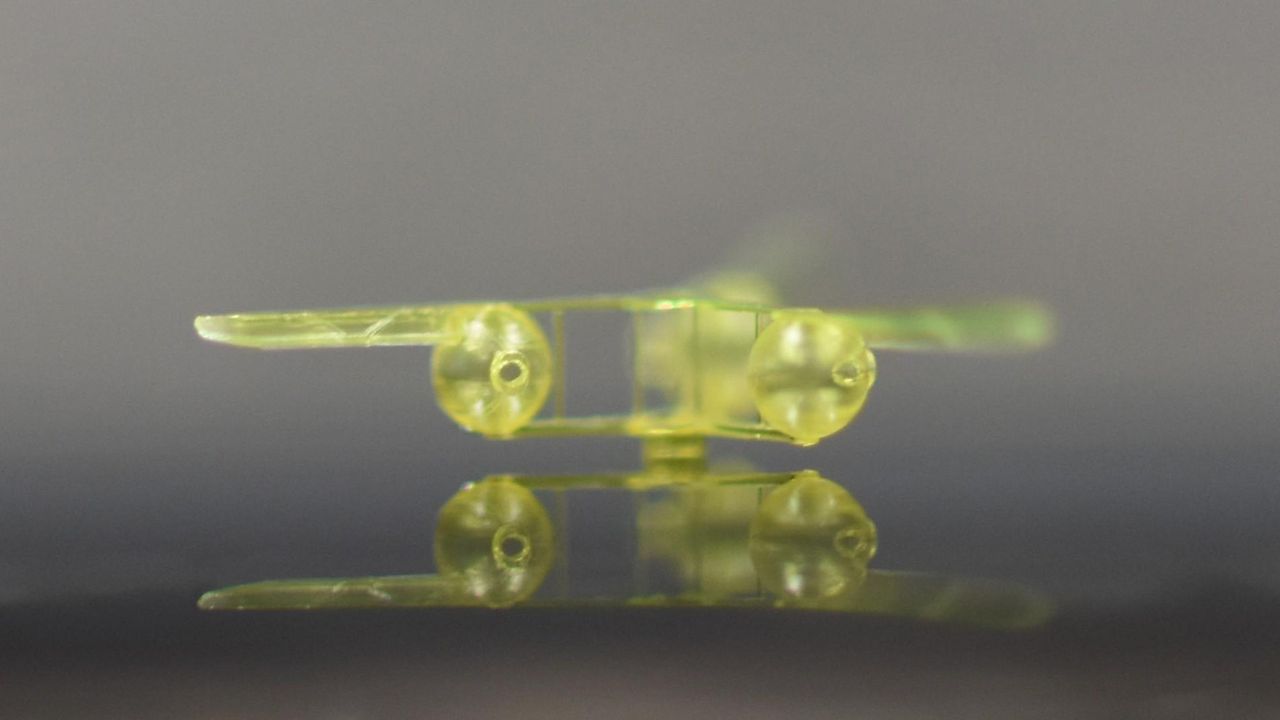
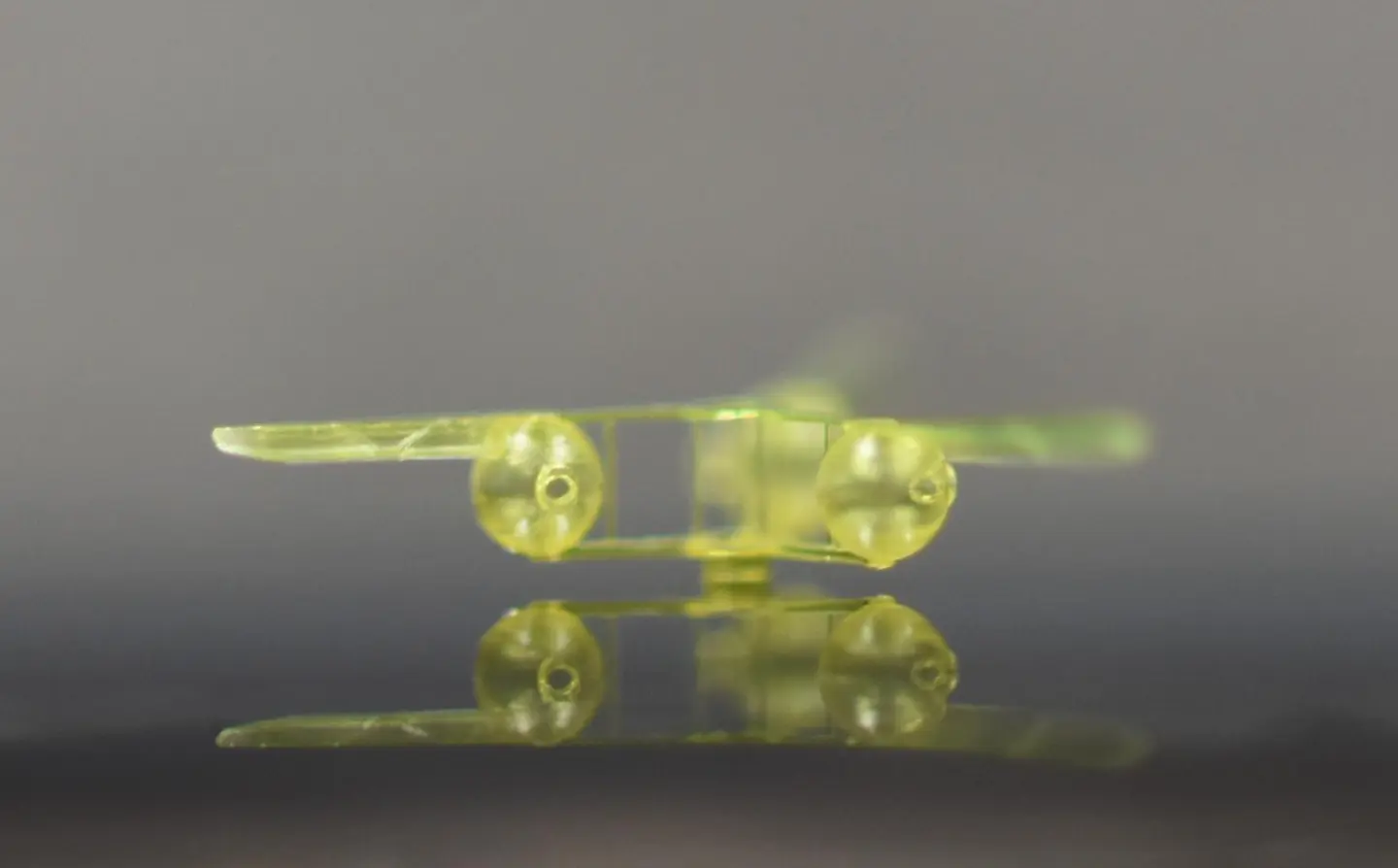
The researchers also made ultralight “microfliers” weighing as little as 150 micrograms. These tiny flying devices contained three microscopic cavities and moved forward when exposed to ultrasonic frequencies, which are above the range of human hearing.
A separate design paired the resonant cavities with miniature propeller blades. The acoustic system generated enough force to spin the blades at up to 13,000 revolutions per minute, according to the report.
The cavities can be made in different shapes and from materials including 3D-printed plastics, glass and rubber-like polymers. The researchers say the method could eventually support small robots and devices that do not need conventional batteries or motors. It may also allow flexible systems with several sound-responsive structures, enabling different sections to be activated and moved independently by using different frequencies.
The reported prototypes demonstrate sound-powered motion, but the source does not state that the technology has yet been incorporated into practical commercial devices.