/https://tf-cmsv2-smithsonianmag-media.s3.amazonaws.com/filer_public/bf/1b/bf1be1f3-1997-47c0-9261-53826fb66ee4/gettyimages-464412477.jpg)
Daily Weird News Report
Parts of a coastal fortress built under Henry VIII may still survive in the walls of another castle several miles away, according to research by University of Kent fellow Christopher Moore.
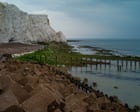
Sandown Castle was constructed on Kent’s eastern coast between 1539 and 1540 as part of Henry’s defensive building program. The artillery fort remained in use beyond the Tudor period, including as a garrison during the English Civil Wars, but storms and waves gradually damaged the structure and made it less useful.
For years, Sandown was widely understood to have largely disappeared into the sea. Moore’s research presents a different account: the castle was systematically stripped over time, with its stone distributed among at least five locations in East Kent.
The clearest documented connection is with Dover Castle. A report dated 1883 states that stone taken from Sandown was sent to Dover for the construction of new quarters for the castle’s commanding officer. Moore also identified architectural similarities and evidence linking the work to Robert Nicholl Dawson-Scott, the engineer responsible for late-19th-century alterations at Dover.
The research began with an elusive Tudor-era diary describing the construction of Sandgate Castle, another Kent fortification built around the same time as Sandown. The diary had been incorrectly cataloged among unrelated manuscripts, after both the British Museum and the British Library initially failed to locate it. Victorian references eventually helped Moore find the volume.
The diary described the reuse of architectural fragments, or spolia, in the construction of Sandgate. Moore says this practice was common in Henry’s castle-building program, with materials often taken from religious houses dissolved during the English Reformation. His findings suggest that later builders continued the pattern by reusing parts of Sandown in Victorian-era projects.
Sandown formed part of a trio of major Kent fortifications alongside Walmer and Deal castles. Moore believes Henry may have taken a direct interest in the engineering and design of these defenses. He now hopes to locate additional fragments from Sandown and establish where the remaining material ended up.
The research does not claim that the entire surviving fabric at Dover came from Sandown. Instead, archival records and architectural evidence identify a specific transfer of stones, offering a more complicated history for a fortress often described simply as a victim of coastal erosion.