Daily Weird News Report
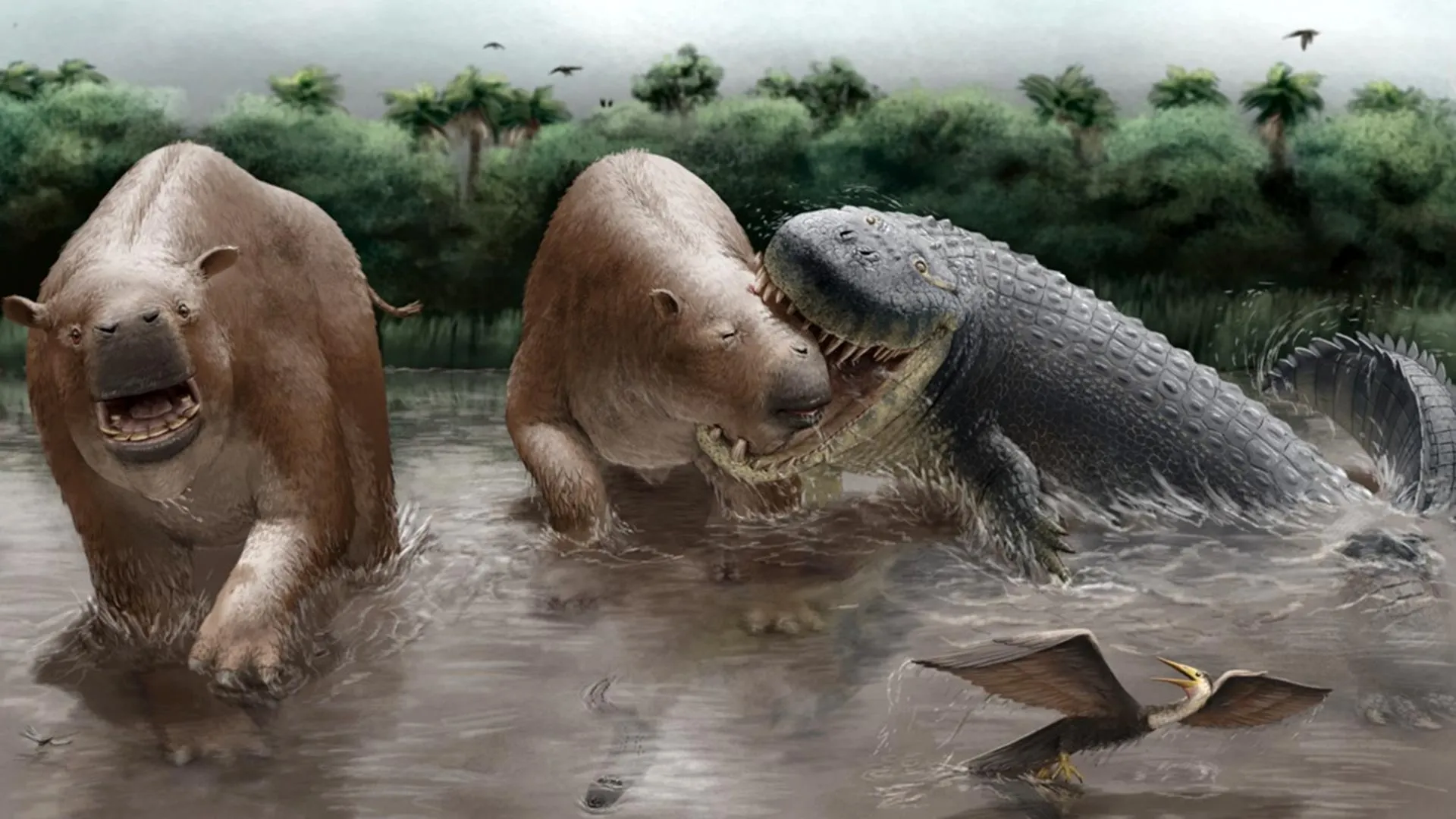
More than 10 million years ago, a vast lake covered much of what is now South America, supporting an ecosystem of unusually large animals. New research suggests that one of its most formidable inhabitants, the roughly 23-foot (seven-meter) crocodylian Purussaurus neivensis, may have been the region’s leading predator.
The findings come from an examination of fossilized bite and tooth marks on the remains of ancient herbivores. According to research reported by the University of Helsinki, these traces provide direct evidence that predators attacked or fed on the animals, rather than relying only on estimates based on body size or anatomy.
The fossils examined date from approximately 10.5 million to 16 million years ago. Researchers identified a frequency of marks they believe were probably made by Purussaurus, suggesting that the species played an important role in the tropical ecosystem. The study was published in the Journal of Vertebrate Paleontology.
Purussaurus was related to modern caimans and is estimated to have weighed about 1,800 kilograms. It lived among giant turtles and other crocodylians, while the surrounding shores hosted anacondas, saber-toothed mammals, flightless terror birds and sebecids—land-dwelling relatives of crocodylians.
Its potential prey included giant ground sloths, glyptodonts and several groups of extinct hoofed mammals. Some of those ungulates, including astrapotheres and toxodontids, could weigh more than a metric ton.
That abundance of large prey may have supported several powerful predators. However, the research indicates that crocodylians were especially significant, particularly in attacks on large animals. The researchers further suggest that Purussaurus may have been influential enough to affect herbivore population sizes across the ecosystem.
That conclusion remains a possibility drawn from the fossil evidence, rather than a direct observation of the ancient animal’s broader ecological impact. Still, the bite marks offer a rare record of actual predator-prey interactions and suggest that this giant crocodylian was more than just one large hunter among many in Miocene South America.