
Daily Weird News Report
The UK military is examining whether soldiers could reach remote locations using powered paragliders packed into large rucksacks, according to New Atlas reporting based on information from the Ministry of Defence.
The £6 million study will assess the equipment for reconnaissance missions and troop insertion. The system is being developed by Wiltshire-based start-up Blakcro in partnership with UK Defence Innovation and the Ministry of Defence.
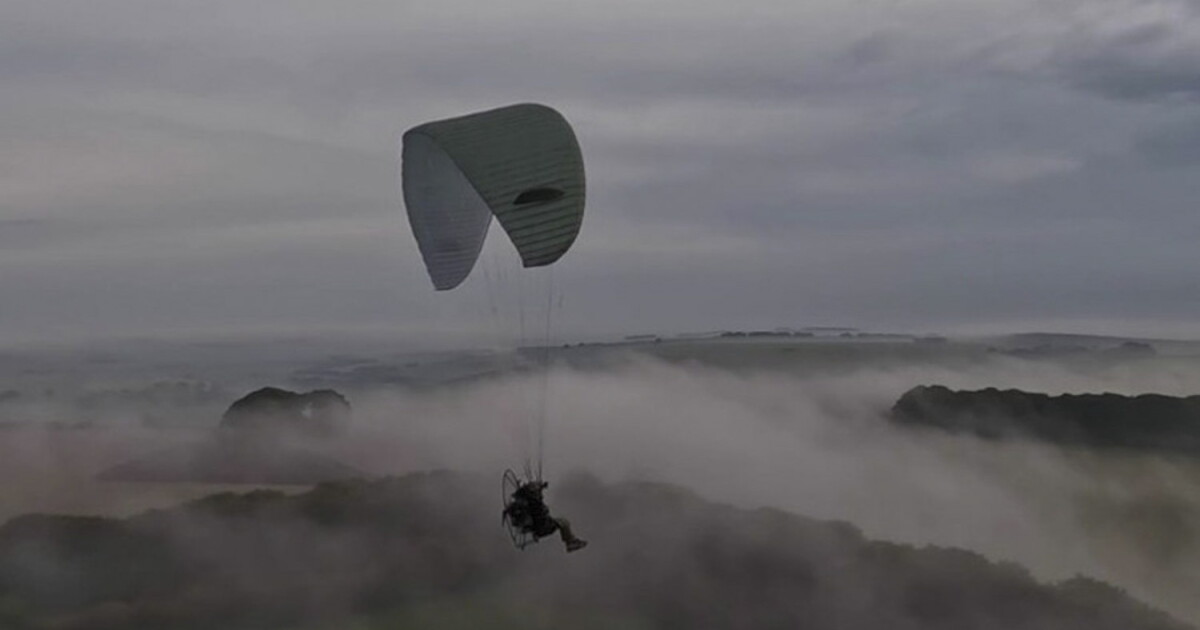
Unlike conventional military parachuting, the system does not require troops to be dropped from an aircraft. It combines a flexible paraglider wing with a powered fan mounted in a titanium frame behind the pilot. The wing and propulsion assembly can reportedly be folded into a backpack and reassembled in about eight minutes.
After assembly, the pilot inflates the wing while facing into the wind, then launches with a short run. Once airborne, the fan provides forward thrust, allowing the wing to gain altitude. The pilot controls speed and direction using steering lines and shifts in body weight.
The Ministry of Defence says the powered paragliders can travel up to 200 miles, or roughly 322 kilometres, and have low acoustic, visual and radar signatures. Those characteristics could make them useful where an aircraft would be too conspicuous or where no runway is available, although the study is intended to evaluate the concept rather than confirm its operational use.
The approach builds on existing paraglider technology, which already allows pilots to steer flexible wings and remain airborne for extended periods. The powered version adds independent forward thrust, reducing its reliance on a suitable mountain or other elevated launch point.
New Atlas reported that testing with the Royal Marines and the Parachute Regiment is scheduled for later in 2026. The supplied report does not state whether the trials will lead to the equipment being adopted by the British military.
/https://tf-cmsv2-smithsonianmag-media.s3.amazonaws.com/filer_public/bc/df/bcdf38b1-5940-4466-8703-d20d1d334481/ozempic.jpg)