Daily Weird News Report
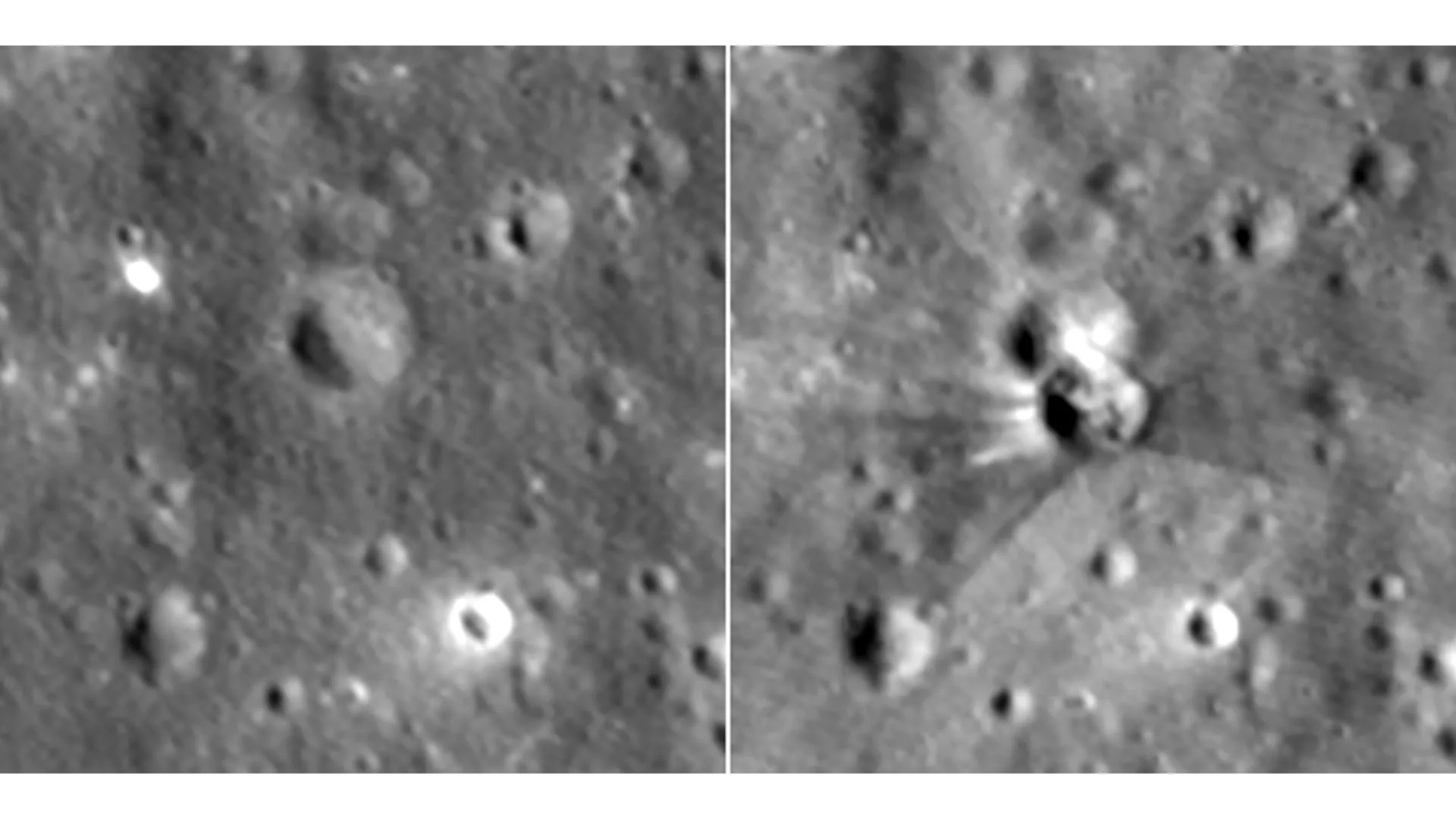
A discarded SpaceX Falcon 9 upper stage has left a new mark on the Moon: a crater roughly 60 feet wide and less than 10 feet deep, according to NASA information reported by ScienceDaily.
The rocket stage hit the lunar surface on Aug. 5 after previously launching in January 2025 as part of the Firefly Blue Ghost 1 mission. NASA’s Lunar Reconnaissance Orbiter photographed the impact site between Aug. 11 and 12, after engineers maneuvered the spacecraft to aim its cameras at the newly formed feature.
The observation required precise timing. LRO was passing about 60 miles above the surface at approximately 1 mile per second, and a photograph taken just 10 seconds too early or too late would have placed the target about 10 miles from the image center. Six days passed before the spacecraft reached a suitable viewing opportunity.
Images from different angles and under varying lighting conditions helped researchers identify the crater rim and calculate its dimensions. LRO’s Narrow Angle Camera can resolve features as small as about 3 feet across.
The photographs also show bright and dark streaks radiating from the crater. NASA said the darker material includes dust and rocks changed over long periods by solar wind, cosmic rays and micrometeorite impacts. The collision excavated some of that weathered material from as deep as 1.5 feet below the surface. Brighter streaks closer to the rim came from fresher material buried farther underground.
Locating the impact involved professional researchers and amateur observers. Independent astronomers used publicly available information to estimate the rocket’s trajectory, while NASA’s Center for Near Earth Object Studies repeatedly refined predictions of the impact location.
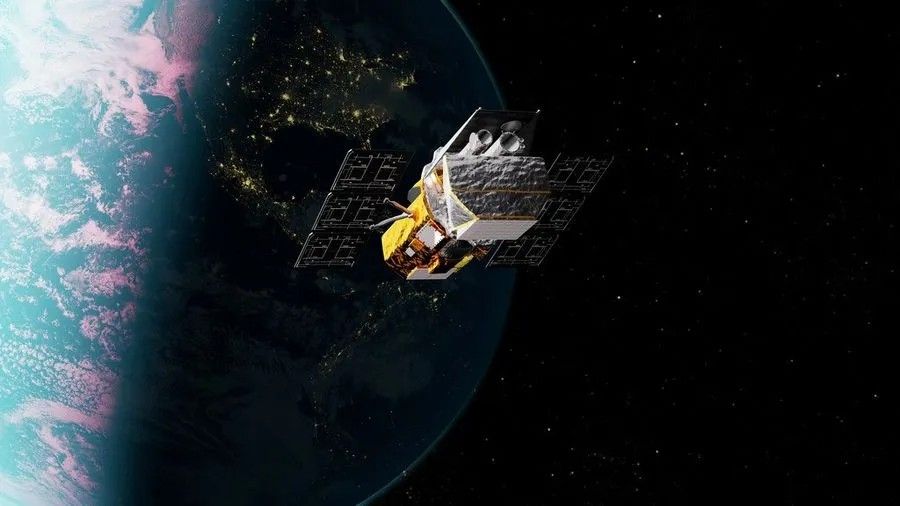
The predicted site was shared with South Korea’s Korea Pathfinder Lunar Orbiter, known as Danuri. Its high-resolution camera photographed the crater within hours, placing NASA’s prediction within about 0.6 miles of the actual location. Comparing new and older images, NASA’s LRO team refined the crater’s center to 19.4759° north, 266.7138° east, at an elevation of 511 meters.