Daily Weird News Report
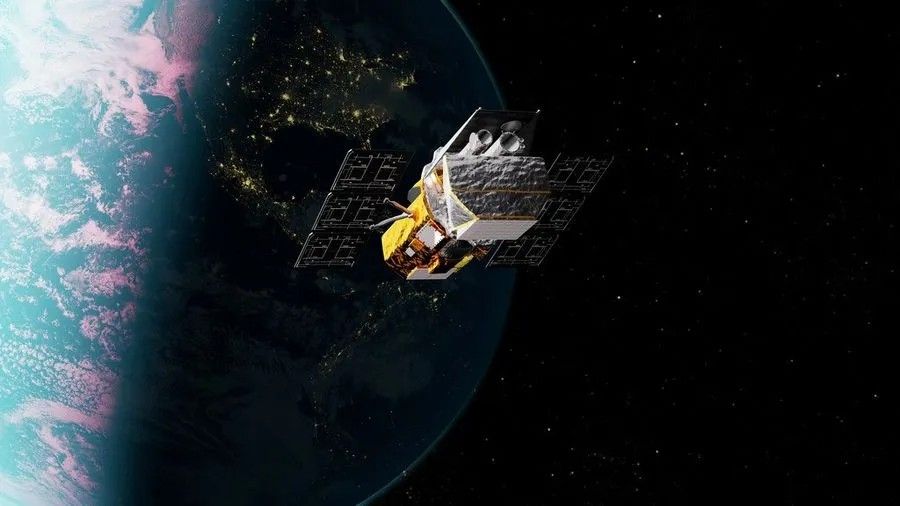
A privately built spacecraft sent to rescue NASA’s Neil Gehrels Swift Observatory has failed to carry out its main objective, leaving the aging telescope on course to fall back into Earth’s atmosphere later this year.
NASA announced on August 19 that the rescue effort would not continue as originally planned because of an ongoing problem with the spacecraft’s attitude control—the systems used to orient and steer it. The mission’s target, Swift, has been losing altitude as atmospheric drag gradually slows its orbit.
The rescue spacecraft, called Lightweight In-Space Navigation and Kinematics, or LINK, was built by Arizona-based Katalyst Space Technologies. NASA awarded the company a $30 million contract in 2025, giving engineers less than a year to design and prepare the vehicle before Swift’s declining orbit made the attempt impractical.
LINK launched from Kwajalein Atoll in the South Pacific on July 3. Its planned maneuver was unusually ambitious: the spacecraft was intended to rendezvous with Swift, use robotic arms to grasp it, and push the observatory into a higher orbit. If successful, the maneuver might have allowed Swift to continue operating into the 2030s.
That plan began to unravel before the rendezvous. NASA reported that LINK developed orientation problems, began spinning, and experienced intermittent communications. The reports also describe failures affecting its attitude-control equipment: Live Science said electrical problems disabled two orientation devices, while Smithsonian Magazine reported that two of three pointing wheels were not functioning and that the cold-gas thruster system had also encountered trouble.
Swift’s descent accelerated after unusually strong solar activity in late 2024. The increased activity expanded Earth’s upper atmosphere, according to the reports, increasing drag on satellites and shortening the time available for a rescue attempt.
Launched in November 2004 for a planned two-year mission, Swift has far exceeded its original operating timeline. It has observed roughly 2,000 gamma-ray bursts—powerful cosmic explosions—as well as other astronomical events using instruments that detect visible, ultraviolet, X-ray and gamma-ray light. One burst recorded in 2009 took about 13 billion years to reach Earth.
Although NASA has ended the effort to boost Swift’s orbit, LINK’s mission is not entirely over. NASA and Katalyst say they may still conduct rendezvous and proximity operations, gather data, and test capabilities relevant to future satellite-servicing missions. NASA officials described the attempt as high-risk and unprecedented, while acknowledging that it did not produce the intended result.