
Daily Weird News Report
Six narwhals have helped researchers collect ocean measurements from parts of East Greenland’s Scoresby Sound that research vessels rarely reach.
The animals were fitted with CTD sensors, instruments that recorded temperature, salinity and depth as the narwhals moved through the water. According to reporting from Phys.org, the measurements were gathered between 2017 and 2022 in the world’s largest fjord system, located on Greenland’s east coast.
The data filled an important gap in observations from the region. Researchers from the University of Copenhagen, the Greenland Institute of Natural Resources and other institutions combined the narwhal readings with historical measurements from the World Ocean Database, including ship-based observations collected between 1891 and 2022.
Their analysis found traces of Atlantic water as far as 300 kilometers, or about 186 miles, from the coast. The fjords contain a mixture of cold Polar Water from the Arctic and warmer, saltier Atlantic Intermediate Water. The researchers’ models indicate that the Atlantic-water layer has grown thicker while the upper Polar Water layer has become thinner.
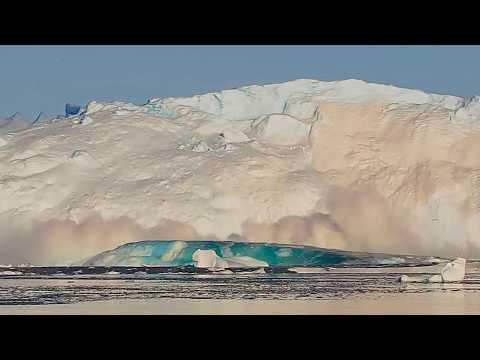
The study also showed that warm Atlantic Intermediate Water now reaches deep basins in front of glaciers hundreds of kilometers inside the fjord system. The researchers said this water can contribute to glacier melting and may help accelerate ice loss.
Because the narwhals can travel through areas where vessels may be unable to operate, their sensors produced measurements that would otherwise have been difficult or impossible to obtain. Susanne Ditlevsen, a professor at the University of Copenhagen, said the additional observations provide a more complete picture of ocean conditions for use in models.
The findings may also help improve climate models. Greenland’s glaciers and ice sheet release freshwater as they melt, and that freshwater can affect ocean circulation and climate patterns beyond the Arctic. The research was published in Science Advances under the title “Narwhals document atlantification of East Greenland.”