Daily Weird News Report
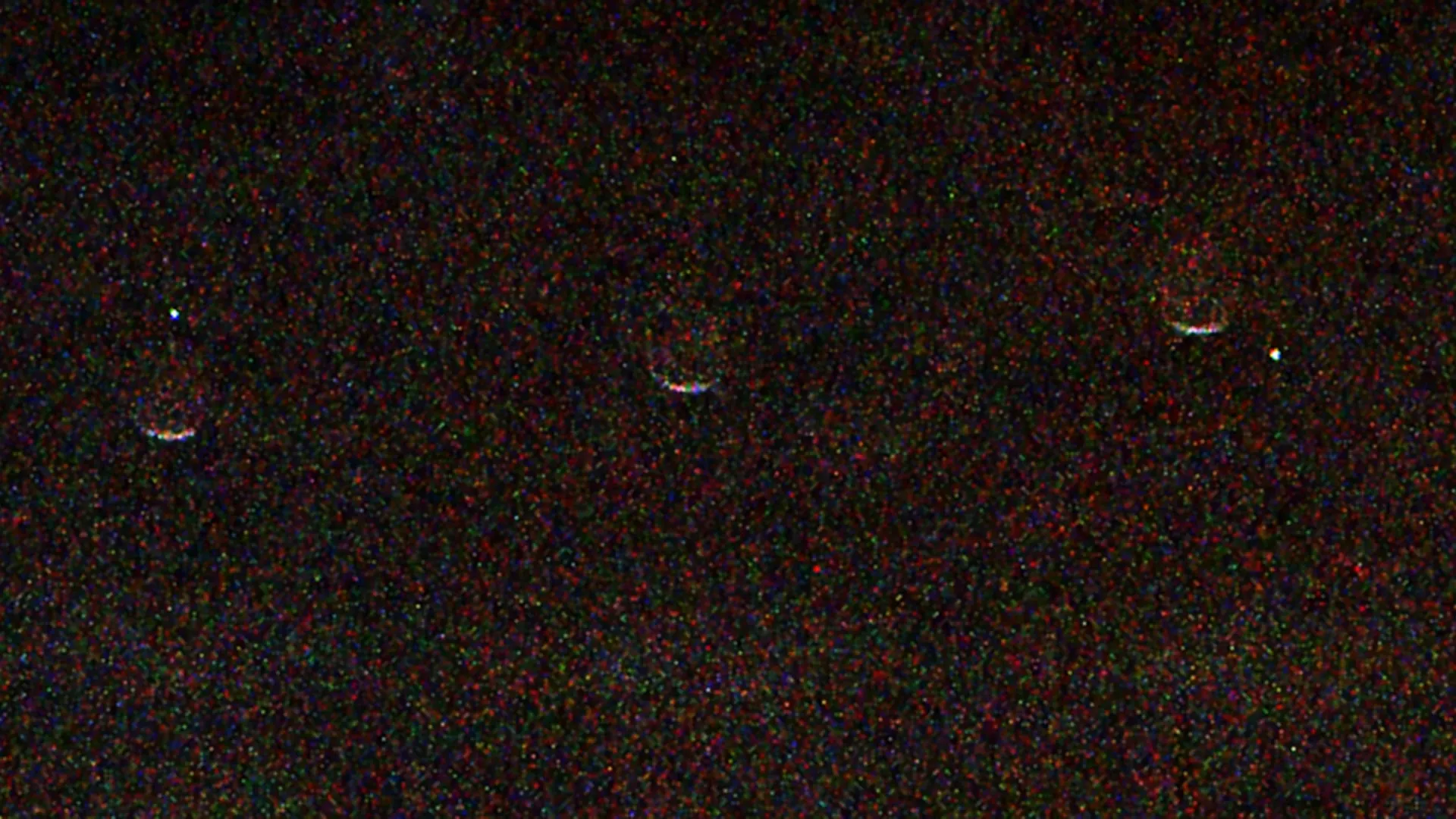
Earth briefly disappeared from view in a sequence of images captured by NASA’s Perseverance rover on Mars, when the planet passed behind Phobos, one of Mars’ two moons.
The rover used its Mastcam-Z instrument to record the event at about 7 p.m. local solar time on July 2, 2026—the mission’s 1,907th Martian day. In the resulting composite, Earth appears as a tiny point of light moving diagonally across the sky while Phobos travels in the opposite direction. The moon then crossed in front of Earth, blocking it from view for a short time.
NASA’s Jet Propulsion Laboratory described the observation as the first time Earth has been recorded disappearing behind another object from the surface of a different planet. The agency said the alignment produced an unusual view of Earth from Mars, with the distant planet reduced to roughly a single-pixel-sized point in the images.
At the time, Perseverance was positioned along the rim of Mars’ Jezero Crater. Earth was approximately 195 million miles, or 314 million kilometers, away. Phobos, by contrast, is about 17 miles, or 27 kilometers, wide at its broadest point and orbits Mars roughly 4,850 miles, or 7,800 kilometers, above the planet.
The event is technically an occultation: an apparently larger foreground object completely blocks a more distant object from the viewer’s perspective. It is not an eclipse, which involves one object entering another object’s shadow. Perseverance has also observed transits in which Phobos or Mars’ other moon, Deimos, passes across the Sun as seen from the Martian surface.
The observation had to be planned because Phobos crosses the Martian sky three times each day, while Earth remains visible for months at a time. According to the NASA-provided material, arranging the two objects in the correct alignment required planning and favorable timing.