Daily Weird News Report
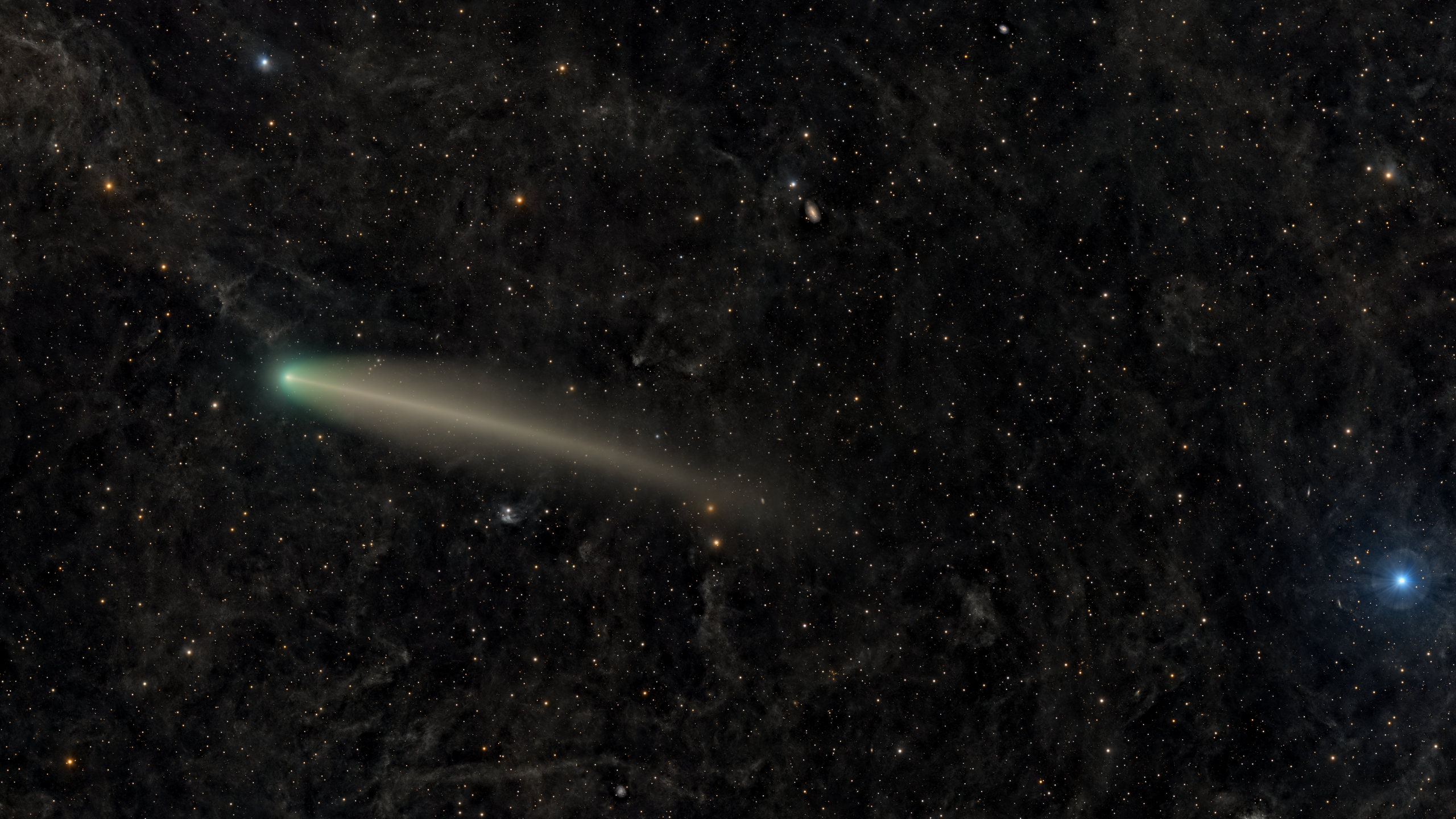
Comet 220P/McNaught, normally a faint object, delivered an unexpectedly bright display this summer when two outbursts caused its luminosity to increase by roughly 20,000 times, according to Space.com. The comet is expected to fade as it moves away from the sun, although another burst of activity remains possible in the coming weeks.
McNaught travels around the sun once every 5.5 years and passed its closest point to the star, known as perihelion, on June 14. Solar heating can activate a comet by turning volatile ices directly into gas and releasing dust that reflects sunlight. In McNaught’s case, that process was accompanied by two dramatic increases in activity.
The comet’s reported brightness was magnitude +9.2, based on data from the Comet Observation Database operated by the Crni Vern observatory. At that level, it may be difficult to see through binoculars unless viewing conditions are very good. A small telescope, dark skies and patience could reveal it as a faint, diffuse patch among the stars.
For observers in early September, Space.com recommends looking east around midnight, when the constellation Taurus is rising. The Hyades star cluster forms a recognizable “V” in Taurus. McNaught can be found near Omicron Tauri, a binary star system located two stars from the point of that formation.
The comet should be easier to seek out during the darker nights around the new moon on Sept. 10 and 11. Those conditions may also help astrophotographers capture it.
Photographer Osama Fathi photographed McNaught above Egypt on Aug. 15, when a Perseid meteor appeared close to the comet in one frame. Another astrophotographer, Dan Bartlett, assembled images showing the comet’s changing appearance between Aug. 6 and 26 over June Lake, California. That sequence followed an Aug. 5 outburst and recorded changes in the comet’s coma and tail.
Because McNaught’s brightness can change unpredictably, its visibility in the coming weeks is uncertain.