Daily Weird News Report
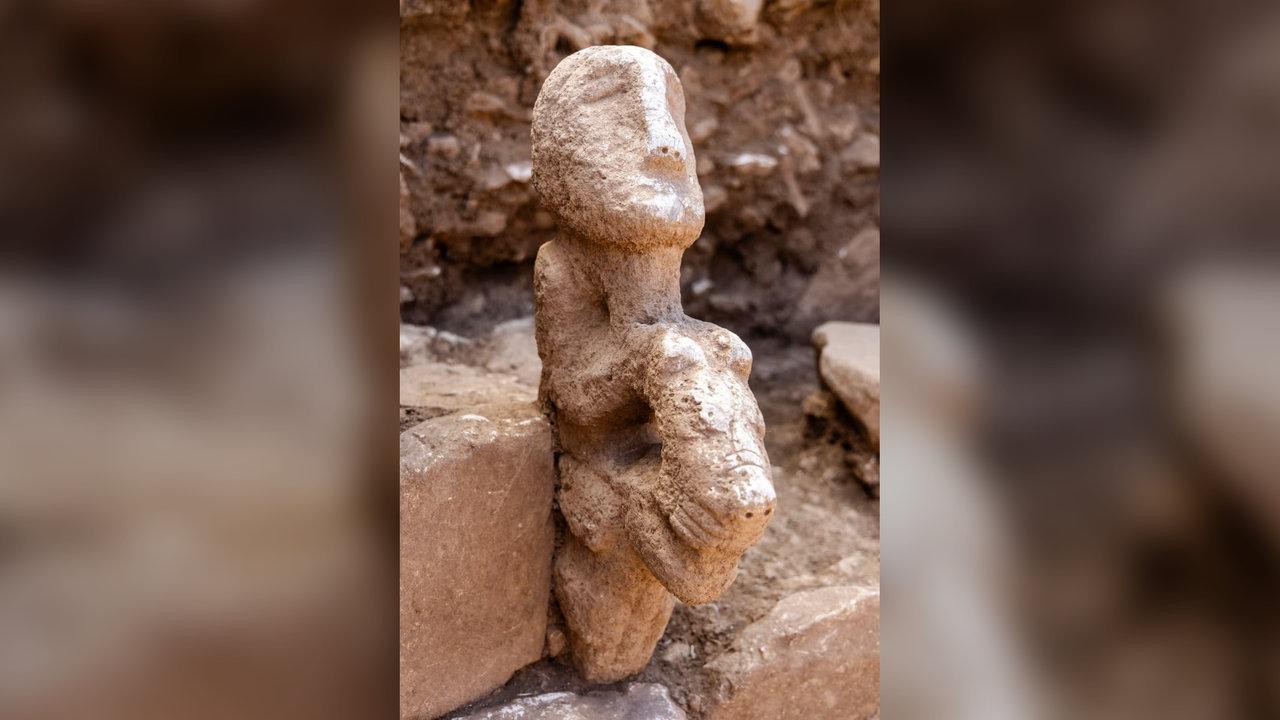
A small Stone Age settlement in southern Turkey has yielded an unusual sculpture: a person seated on the back of a leopard.
The approximately 11,000-year-old statue was found this summer at Karahan Tepe, a Neolithic site in Turkey’s Urfa province. According to a translated statement from the Turkish Ministry of Culture and Tourism, the sculpture stands about 28 inches (70 centimeters) high and was discovered on a platform beside the wall of a round structure roughly 10 feet (3 meters) across.
Turkey’s culture and tourism minister, Mehmet Nuri Ersoy, described the work as being made in a style unlike anything previously seen. The ministry said the discovery could raise new questions about the earliest settlements in the region.
Karahan Tepe was established around 9750 B.C. and is considered one of the world’s oldest known villages. It belongs to a region that also includes other early settlements, such as Göbekli Tepe, where archaeologists have found artwork involving people and wild animals.
Jens Notroff, a Neolithic archaeologist at the German Archaeological Institute who was not involved in the excavation, told Live Science that the new statue appears to reverse a more familiar artistic arrangement: instead of an animal being shown on top of a human, the person is depicted on the animal.
A human figure with a leopard on its back had previously been found at Karahan Tepe and is now held by the Şanlıurfa Museum. Other discoveries from the region include a carved scene at Sayburç showing two leopards, a bull and a man holding his penis. Archaeologists also found large male sculptures at Karahan Tepe and near Göbekli Tepe, including figures that may have represented an important ancestor.
The symbolism of the new human-and-leopard image is not established. Notroff noted that leopards were common predators in the area and may have been viewed as dangerous, powerful animals and difficult prey for skilled hunters. He suggested that a person shown confronting or apparently controlling one could have symbolized courage, strength or power over danger.
Those possibilities remain interpretations. The statue’s precise purpose and meaning are still unknown.